Parc de l’impératrice Élisabeth
Felix AustriaParc de l’impératrice Élisabeth is the setting of Adèle’s unusual November birthday celebration, held in a newly built pavilion rather than at home. The park’s late-autumn bleakness surrounds a transparent, elegant structure that offers little shelter from the cold, making the birthday gathering a scene where polished sociability and Stefania’s invisible service occupy the same space.
Setting and Appearance
The park is presented as a carefully ordered landscape of flowerbeds, lawns, paths, trees, trimmed shrubs, kiosks, and benches. The pavilion, erected that summer to plans by Karol Zachariasiewicz, appears airy and graceful within this arrangement. By late autumn, however, the park has acquired a penetrating sadness: crows call above wet, black tree trunks, and the seasonal setting unsettles the pavilion’s elegance.
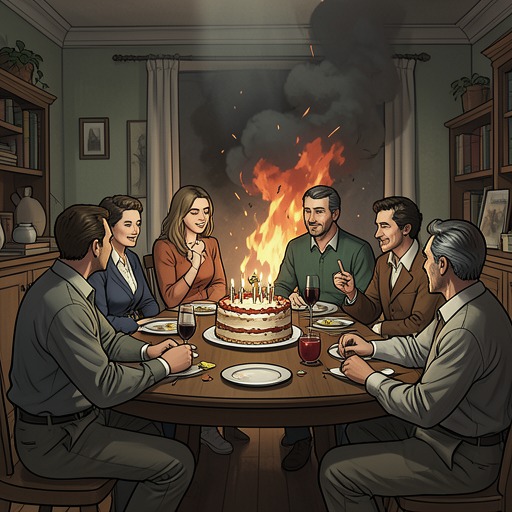
The pavilion is made of glass and wood, and its transparency gives it an exposed, almost defenseless quality. Damp air enters, while the bare interior suggests abandonment and forgetting. Its small stove provides the only real warmth; the women crowd close to its tiled sides to warm their hands, while the men sit at round tables with carved wooden legs and delicately woven patterns on their chair backs. The building’s beauty does not cancel its discomfort: it makes the cold visible.
The Birthday Gathering
Adèle chooses the pavilion for her birthday instead of celebrating at home, despite Stefania’s warning that November is an unsuitable time for a light wooden building. The tables are dressed with autumn flowers, and guests continue chatting while waiting for the meal. Petro and Felix have prepared a charcoal portrait of Adèle; Petro credits Felix with the work and describes his own contribution as a few corrections. In the portrait, Adèle’s expression is solemn and prayerful, matching the face Stefania has noticed on her often lately.
The celebration also reflects Adèle’s recent change in manner. She has been praying frequently, moving her lips, smiling to herself, and disappearing for long stretches; she has abandoned embroidery, fashion magazines, copying poems, and drawing album vignettes. Stefania finds her secretive and cunning, but also less difficult to bear. The choice of a public pavilion for the birthday is one outward sign of a woman whose habits have become harder for the household to read.
Social Space and Service
The seating plan establishes the gathering’s social arrangement: Adèle, Petro, and Felix are to sit near Père Josef and his wife. Stefania has no place at the table. Her task is to see that everything is properly arranged, that each guest can taste every dish, and that everyone is satisfied; she serves salads and carries canapés to Princess Przytulska. Adèle loudly praises the household’s service while gesturing toward Stefania, turning the servant’s labor into a public compliment without changing her subordinate position.
The park’s pavilion thus serves as more than a picturesque venue. Its tables gather the family and guests into a formal social scene, while Stefania moves among them as the person responsible for making the celebration work. The contrast between the guests’ leisurely conversation and her continuous work makes the event’s hierarchy legible through spatial arrangement and action rather than through explicit dispute.